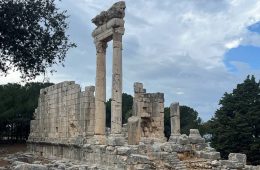
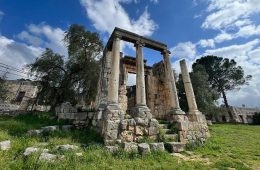
Qasr Naous is the vestige of two Roman Temples situated on a hilltop, some 600 meters above the sea in the village of Ain Aakrine, Koura.
The first... Read More...
Koura, a prefecture of North Lebanon, is also a region rich in Roman remains. Bziza is eighty-five kilometers (a little over fifty miles) from Beirut and lies a... Read More...
Locally known as "Kasr al-Wadi," AlManara/Hammara temple is the site of a Roman shrine upon which a Christian church was later constructed. The shrin... Read More...
Chhim is a town located 47 kilometres south-east of Beirut. Chhim is located on 4 mountains in the Chouf region in Lebanon.
Old settlement in Chhim dates... Read More...
Also known as Qasrnaba, this rural village is well known for its hilly terrain, deep valleys, and agricultural lifestyle. Most Qsarnabans are traditional farmer... Read More...
Distinguished for its colossal grotto, Afqa is a rectangular-prism-shaped breach within a 200-meter-high cliffside. From a distance, the cave appears like a mou... Read More...
The Temple of Bacchus at Baalbeck, a World Heritage site, is one of the best preserved and grandest Roman temple ruins in the world. It and its ornamentation&nb... Read More...
In the village of Dakoue, there are the ruins of a Roman temple that still retains a central courtyard and a front colonnade composed of three columns.
Th... Read More...
The Sfireh temples were built in the time of the Emperor Septimius Severus in the 2nd century AD. which explains the name of the village of Sfireh, adapted fro... Read More...
In the second century BCE, the Itureans, an Arab tribe from what is now called Jordan, settled in the southern Bekaa valley. Here, they founded a city called C... Read More...



 Chat with US